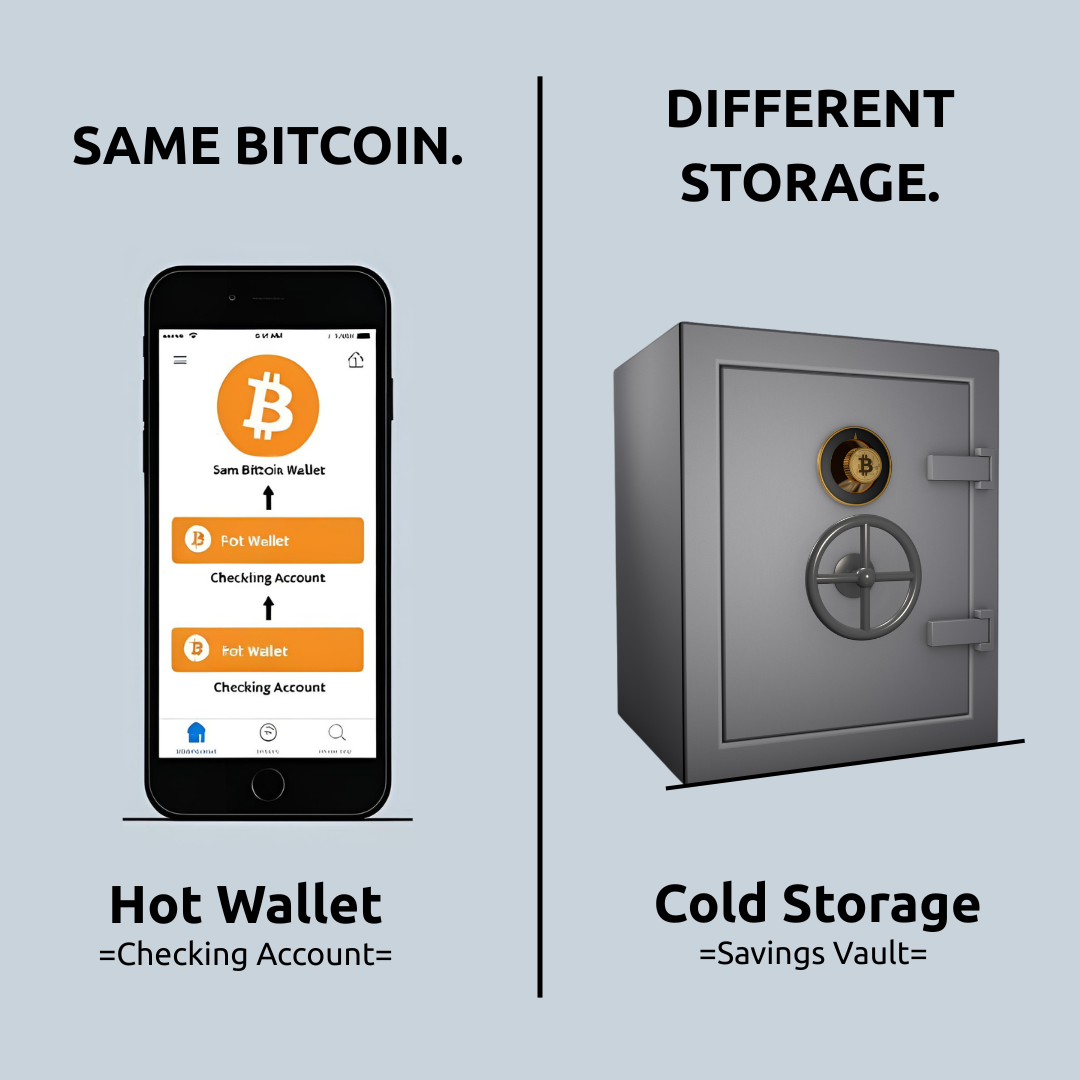
Why Bitcoin Storage Is Different
Bitcoin doesn’t live in an account.
It lives on the blockchain, and ownership is controlled entirely by cryptographic keys. Whoever controls the private keys controls the bitcoin.
That’s why learning proper storage is a core part of real ownership. For many Canadians, this journey begins right after they Buy Bitcoin in Canada—because buying is easy, but keeping it safe is what actually matters.
Hot Wallets vs. Cold Storage — The Big Picture
Bitcoin wallets generally fall into two categories:
- Hot wallets — connected to the internet
- Cold storage — kept completely offline
Both have valid use cases. The key is understanding the trade-offs between convenience and security.
What Is a Hot Wallet?
A hot wallet is any Bitcoin wallet connected to the internet.
Common examples include:
- Mobile wallet apps
- Desktop wallets
- Web wallets
- Bitcoin left on exchanges
Hot wallets are popular because they’re fast and easy to use. They’re ideal for spending, learning, and small balances—but not for long-term savings.
Pros of Hot Wallets
- Easy to use
- Instant access
- Good for small amounts
Risks of Hot Wallets
Because they’re online, hot wallets are exposed to:
- Malware
- Phishing attacks
- Exchange hacks
This is why experienced Bitcoiners avoid storing large balances online—especially as holdings grow into serious savings or business reserves.
What Is Cold Storage?
Cold storage keeps your Bitcoin completely offline.
The most common form is a hardware wallet, a physical device that stores private keys without exposing them to the internet.
With cold storage:
- Private keys never touch the web
- Transactions are signed offline
- Remote attacks are dramatically reduced
For long-term holders, cold storage is considered the gold standard—particularly for individuals and families treating Bitcoin as a serious asset, similar to those served by Bitcoin for High Net Worth Canadians.
Wallet Comparison at a Glance
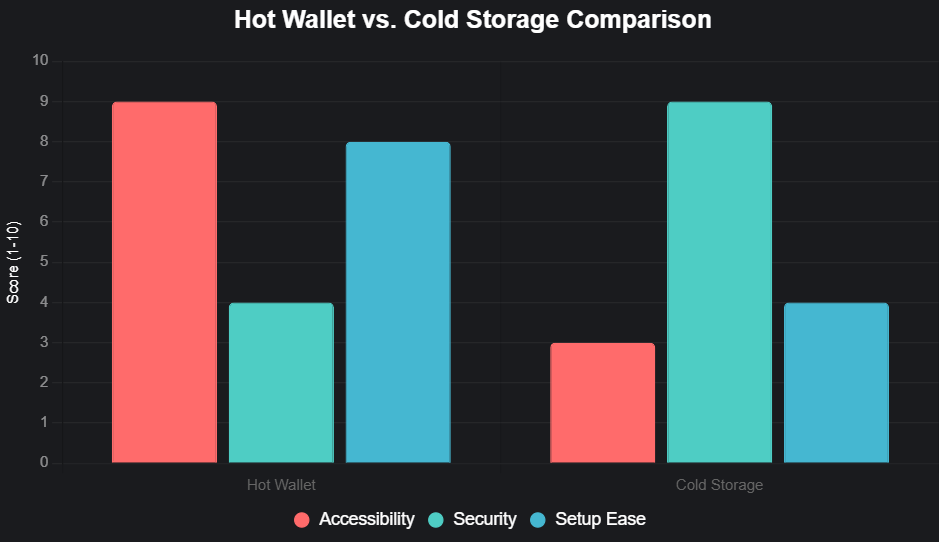
Accessibility: Hot wallets are very accessible (≈9/10). Cold storage is slower (≈3/10).
Security: Cold storage leads (≈9/10). Hot wallets are more vulnerable (≈4/10).
Setup Ease: Hot wallets are simple (≈8/10). Cold storage requires more care (≈4/10).
Sources: Investopedia, Ledger Academy, CoinWeb
The Role of the Seed Phrase
Every wallet—hot or cold—creates a seed phrase.
This phrase is the master key to your Bitcoin.
If someone gets it, they get your bitcoin. No password reset. No support desk.
That’s why seed phrase security is essential for everyone—from individuals to companies implementing Corporate Treasury Bitcoin Canada strategies.
Hot Wallet vs. Cold Storage — Which Should You Choose?
Hot wallets are best if you:
- Are just getting started
- Hold small amounts
- Need frequent access
Cold storage is best if you:
- Hold Bitcoin long-term
- Treat it as savings
- Want maximum security
Many businesses follow the same logic—using hot wallets for operations while securing reserves separately, similar to models used in Bitcoin for Businesses Canada.
A Simple Rule Many Bitcoiners Follow
Keep spending money in a hot wallet.
Keep savings in cold storage.
This approach balances usability with safety and dramatically reduces risk.
Common Mistakes to Avoid
- Leaving large balances on exchanges
- Storing seed phrases digitally
- Taking photos of recovery words
- Trusting unsolicited “support” messages
These mistakes are irreversible in Bitcoin—which is why education matters more than tools.
Final Thought
Buying Bitcoin is only the first step.
Protecting it is what makes ownership real.
Hot wallets offer convenience.
Cold storage offers peace of mind.
Understanding the difference isn’t optional—it’s the foundation of self-custody.