
Bitcoin Inheritance in Canada
Bitcoin inheritance done right in Canada. Bitcoin introduces unique challenges for estate planning.
The Core Problem:
Access Without the Key
Bitcoin held in self-custody requires a private key or seed phrase (12–24 words) to access.
If you pass away without leaving clear instructions or access:
your Bitcoin is permanently lost.
Unlike a bank account:
- There is no recovery process
- No institution can override access
- No “forgot password” option
Billions of dollars in Bitcoin have already been lost this way.
The Critical Difference:
Self-Custody vs Exchange
Bitcoin on an exchange (custodial): Can often be released to estate executors with proper documentation (death certificate, probate). Contact the exchange.
Bitcoin in a self-custody wallet (non-custodial): Requires the seed phrase or private key. Without it, the Bitcoin is unrecoverable — by anyone.
Action: If you hold Bitcoin in a self-custody wallet, your estate plan must include a way for your executor to access the seed phrase securely.
How to Prepare Your Bitcoin for Inheritance

Option 1: Secure document with lawyer
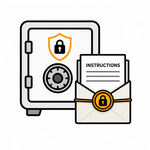
Option 2: Safe + sealed instructions
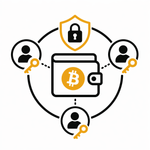
Option 3: Multi-signature setup
Canadian Tax Treatment at Death
The CRA treats Bitcoin as a capital asset.
At death, a deemed disposition occurs:
- Bitcoin is treated as if it were sold at fair market value
-
Capital gains are calculated:
Gain = Fair Market Value at Death − Adjusted Cost Base (ACB)
- 50% of the gain is taxable on the final return
What Happens to Heirs?
- Heirs receive Bitcoin with a new ACB equal to the value at death
- No additional tax until they sell
Planning tip: Ensure your estate has liquidity to cover tax liabilities
Practical Steps
Document all Bitcoin holdings and wallet locations
Store seed phrases securely (offline only)
Leave clear instructions for your executor
Record purchase history for tax reporting
Consult a Canadian estate lawyer and CPA familiar with Bitcoin
For Executors
If you are an executor managing an estate with Bitcoin:
Locate the seed phrase, hardware wallet, or exchange accounts
Do not move funds immediately—understand tax implications first
Determine fair market value at date of death
Work with a Bitcoin-aware Canadian CPA
Secure access before taking any action
Frequently Asked Questions
What if my loved one left no seed phrase information?
Unfortunately, Bitcoin held in self-custody without a seed phrase is permanently inaccessible. No one — not the exchange, not the government, not any company — can recover it.
Can I leave Bitcoin to my grandchildren?
Yes. You can specify Bitcoin in your will and ensure your executor has access to the seed phrase to transfer the Bitcoin to your beneficiaries.
How do I know if my loved one had a Bitcoin account?
Check their email for 1Bitcoin.ca or other exchange confirmations. Look for hardware wallets (Coldcard, Trezor, Ledger). Check their browser bookmarks.
FINTRAC Registered MSB | Non-Custodial | Bitcoin-Only | 20,000+ Canadians Served Since 2020 | 4.8★ Google Reviews