
Is Bitcoin Safe in Canada?
Secure when done right. Risky if you trust the wrong platform.
What Is Bitcoin?
Bitcoin itself — the protocol — has never been hacked. The Bitcoin network has run continuously since 2009 without a major security failure.
Where Canadians get hurt isn’t the Bitcoin — it’s the platforms and behaviours around it:
1. Leaving Bitcoin on custodial exchanges that get hacked or go bankrupt
2. Falling for scams and sending Bitcoin to fraudsters
3. Losing access to their own wallet (forgotten passwords, lost seed phrases)
4. Using unregistered, unregulated platforms
Understanding these risks lets you avoid them.
Platform Safety: What to Look For
Not all Bitcoin platforms in Canada are equal. Here’s what separates safe platforms from dangerous ones:
 Safe Platforms Have:
FINTRAC Registration. All legitimate Canadian Bitcoin platforms must be registered as a Money Services Business (MSB) with FINTRAC. You can verify registration at the FINTRAC public registry. 1Bitcoin.ca is fully registered.
Non-custodial model. Platforms that send Bitcoin directly to your wallet cannot lose your Bitcoin in a hack or bankruptcy — because they don’t hold it. 1Bitcoin.ca is non-custodial.
Transparent fees. Safe platforms show you exactly what you’re paying before you confirm.
Canadian presence. Canadian-based platforms are subject to Canadian law and more easily held accountable.
 Red Flags:
– No FINTRAC registration
– Can’t withdraw your Bitcoin (locked in their system)
– Promises of guaranteed returns
– Hidden fees
– No physical address in Canada
– Pushing altcoins aggressively
Custody: The Biggest Safety Decision
Custodial vs Non-Custodial is the most important safety distinction in Bitcoin.
| Custodial | Non-Custodial | |
|---|---|---|
| Who holds your Bitcoin? | The platform | You |
| Risk if platform fails | Could lose everything | No risk |
| Risk of platform hack | Could lose everything | No risk |
| Examples | Coinbase, Shakepay (by default) | 1Bitcoin.ca |
What happened in 2022: Celsius, BlockFi, Voyager, and FTX — all custodial platforms — froze customer withdrawals or collapsed. Canadian users lost significant amounts. Non-custodial platforms were not affected because they never held customer Bitcoin.
1Bitcoin.ca sends Bitcoin directly to your wallet. We never hold your funds.
Simple Bitcoin Access for Canadians
A platform or person promises to double your Bitcoin if you send it to them. They take it and disappear. No legitimate service offers guaranteed returns.

Sophisticated websites showing fake account balances and "profits." The moment you try to withdraw, they demand fees or taxes. Once paid, they disappear.

Scammers pose as 1Bitcoin.ca, Coinbase, or other platform support staff on social media. They ask for your seed phrase or password. Legitimate companies will NEVER ask for your seed phrase.

Someone you met online (dating app, social media) builds a relationship then introduces you to a "great Bitcoin investment opportunity." The money is gone once sent.
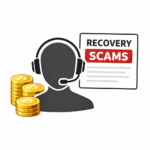
After losing Bitcoin, scammers pose as "recovery experts" offering to retrieve your lost funds for an upfront fee. Bitcoin transactions are irreversible. Recovery companies cannot return Bitcoin — they are scams.
How to Keep Your Bitcoin Safe
Use a non-custodial platform like 1Bitcoin.ca. Your Bitcoin goes to your wallet at purchase.
Withdraw to a hardware wallet for larger amounts. Coldcard, Trezor, and Ledger are the leading options.
Protect your seed phrase. Write it on paper. Store it somewhere safe and fireproof. Never photograph it or type it digitally.
Enable 2FA on your account. Use an authenticator app, not SMS.
Verify URLs. Bookmark legitimate sites. Scammers create fake websites with similar addresses (1bitco1n.ca, etc.).
Never share private keys or seed phrases. With anyone. Ever.
Is Bitcoin Legal in Canada?
Yes. Bitcoin is completely legal to buy, hold, and sell in Canada. The Canada Revenue Agency treats Bitcoin as a commodity for tax purposes. Purchases are not taxable; capital gains apply when you sell.
Canada was the first country to approve a Bitcoin ETF (2021), demonstrating the government’s acceptance of Bitcoin as a legitimate asset class.
Frequently Asked Questions
Can the government seize my Bitcoin?
Bitcoin held in self-custody (your own wallet) is extremely resistant to seizure — the government would need your private key or seed phrase. However, you remain legally responsible for reporting and paying taxes on Bitcoin gains.
What if 1Bitcoin.ca shuts down?
Because 1Bitcoin.ca is non-custodial, your Bitcoin is in your wallet before we ever close. Our closure would not affect Bitcoin you’ve already withdrawn.
Is Bitcoin insured in Canada?
Bitcoin is not covered by CDIC (Canada Deposit Insurance Corporation). It’s not a deposit product. Self-custody Bitcoin is effectively protected by your own security practices.
Is Bitcoin volatile?
Yes. Bitcoin has experienced multiple 50–80% price drawdowns in its history. Only invest what you can afford to hold through significant price swings.
This is a personal financial decision. Most financial guidance suggests only allocating a percentage of your portfolio to high-volatility assets like Bitcoin.
Generally no, unless other taxable events occurred.
The Bottom Line
Bitcoin is safe when you:
1. Use a FINTRAC-registered, non-custodial platform
2. Withdraw to your own wallet
3. Protect your seed phrase
4. Recognize and avoid scams
FINTRAC Registered MSB | Non-Custodial | Bitcoin-Only | 20,000+ Canadians Served | 4.8★ Google Reviews