We’ve spent six years at 1Bitcoin.ca helping Canadians do one thing: buy Bitcoin and take custody of it.
That was the right work for that phase. It’s still important work — the on-ramp matters, custody matters, ownership matters. But the conversation among our most sophisticated clients has shifted over the past 18 months. The question is no longer “how do I buy and hold it.” The question is: “now that I hold it, what do I do with it?”
That question has a real answer. And it doesn’t involve selling.
It involves a recognition that Bitcoin is not just an asset to accumulate. It’s becoming the foundation of a new credit system. The same way real estate became collateral for the modern mortgage market. The same way gold underpinned bank balance sheets for a century before that.
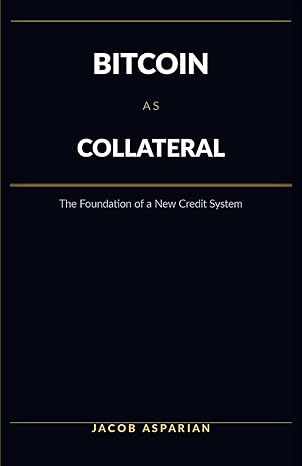
Today I’m publishing a book about exactly this question. It’s called Bitcoin as Collateral, it’s live on Amazon, and the link is at the bottom of this post. But this essay is the standalone argument — the thesis the book builds out across 200 pages.
The Three Phases of Bitcoin
Bitcoin’s story has unfolded in three distinct phases, and each phase has had its own dominant question.
Phase 1 (2009-2020) was the speculative asset phase. The buyers were retail and technologists. The dominant question was: will this thing survive? For more than a decade, that was the only question that mattered. Most people held Bitcoin as a small bet that it might one day be worth something. The price reflected that uncertainty.
Phase 2 (2020-2025) was the treasury reserve phase. The buyers expanded to include corporates and sovereigns. MicroStrategy bought billions. Tesla added it to the balance sheet. El Salvador made it legal tender. The US, under different administrations, signaled different positions on strategic reserves. The dominant question shifted: should we hold this?
Phase 3 — which began roughly in 2025 and is accelerating now — is the institutional collateral phase. The buyers are credit markets and treasury operators. The dominant question is no longer survival or allocation. It’s: how do we deploy it?
This is not characterized by new buyers entering the market. It’s characterized by existing holders demanding utility from the asset they already hold. A family office that’s held 200 BTC since 2017 doesn’t want to sell. They want to borrow against it to fund another acquisition. A corporate treasury holding $50M in Bitcoin doesn’t want to convert to cash for working capital. They want a credit facility secured by their reserves. A high-net-worth individual sitting on millions in unrealized Bitcoin gains doesn’t want a taxable event. They want liquidity without disposition.
This is the demand that’s emerging now. And the supply side — the credit infrastructure that can actually serve this demand — is what gets built next.
The 2022 Lesson That Most People Got Wrong
When you bring up Bitcoin-backed lending, the immediate response from anyone with a finance background is the same: “Didn’t all of those lenders fail in 2022?”
Celsius. BlockFi. Voyager. Genesis. Yes. All of them collapsed.
But the lesson from 2022 is not what most people think it is. The asset did not fail. Bitcoin survived 2022 just fine. It dropped, it recovered, and it has since hit new all-time highs. The collateral worked exactly as collateral is supposed to work.
What failed was the structures built on top of it. Celsius commingled customer assets with operating capital. BlockFi rehypothecated client Bitcoin — meaning they pledged the same coin multiple times. Genesis ran an opaque lending book with concentrated counterparty exposure. Voyager engaged in unsecured lending while calling itself a “secured” lender.
These weren’t failures of Bitcoin. These were failures of institutions that used the word “collateral” while practicing something else.
We don’t conclude from 2008 that mortgages can’t be collateralized. We conclude that the structure matters more than the asset. The same logic applies here. Properly structured Bitcoin-backed credit — with segregated custody, senior secured positions, prohibition on rehypothecation, and conservative loan-to-value ratios — performs through severe market drawdowns. Improperly structured Bitcoin-backed credit blows up when stress arrives. The 2022 collapses were proof of the second case, not refutation of the first.
What Properly Structured Bitcoin-Backed Credit Looks Like
The structural principles that distinguish institutional Bitcoin credit from the 2022 lender model are not theoretical. They’re known, observable, and documentable.
Segregated custody. The collateral is held by a qualified, regulated custodian — not the lender. Each client’s collateral sits in its own segregated wallet, not commingled with anyone else’s. If the lender becomes insolvent, the collateral is recoverable because it never belonged to them.
No rehypothecation. The lender is contractually prohibited from re-pledging, re-lending, or otherwise encumbering the collateral. Period. No exceptions. This is the single most important structural feature distinguishing institutional Bitcoin credit from the 2022 failures, and it’s the easiest one to verify.
Senior secured position. The lender holds first-lien priority on the collateral. In the event of default, they liquidate first. There’s no waterfall of creditors fighting over assets that aren’t there.
Conservative loan-to-value. The amount loaned against Bitcoin collateral is set conservatively enough that even severe price drawdowns don’t immediately trigger default. Margin calls happen at defined thresholds, with staged liquidation rather than catastrophic forced sales.
Rules-based liquidation. When collateral coverage falls below defined thresholds, liquidation happens automatically and according to predetermined rules — not at the lender’s discretion. This protects both sides: borrowers know exactly what triggers a margin call, and lenders aren’t exposed to discretion-based failures.
None of this is exotic. It’s the basic plumbing of every functioning credit market — applied to Bitcoin as the underlying collateral.
Why This Matters for Canadians Holding Bitcoin
Most of you reading this post bought Bitcoin through 1Bitcoin.ca over the past several years. Some of you are sitting on significant positions. Most of you have never sold a single satoshi, and don’t intend to.
The next chapter of Bitcoin in Canada is about giving you something to do with those positions that doesn’t involve selling them.
That’s what we’re building through Allodial Capital — Bitcoin-backed credit and capital markets infrastructure for Canadian accredited investors, family offices, and corporate Bitcoin treasury operators. Senior secured products. Qualified Canadian custody. Exempt market issuance under disciplined institutional frameworks. It’s the operational version of what Bitcoin as Collateral lays out in book form.
If that work is relevant to you — whether as an investor, a borrower, or a partner — the book is the place to start. It’s not a sales pitch. It’s the thinking that informs the operating thesis.
How to Engage
The book is live on Amazon today:

If you read it and find it useful, an honest Amazon review matters more than the purchase itself. Reviews are how the book reaches the people who need to find it — Canadian capital allocators, treasury operators, credit professionals, and Bitcoin holders thinking about what comes next.
If the operational work — the credit products, the capital markets infrastructure — is more relevant to your situation than the intellectual framework, you can reach me directly at ja***@******an.co. Allodial Capital is currently working with accredited investors, family offices, and corporate Bitcoin holders interested in this exact problem.
For now, just the book.
— Jacob Asparian
Founder, 1Bitcoin.ca | Founder, Allodial Capital
Author, Bitcoin as Collateral