What Was Money Before Dollars and Apps?
Imagine trading chickens for shoes or shells for bread. No wallets, no apps—just bartering goods to get what you need. Money as we know it is a recent invention, evolving over centuries to meet society’s needs. From livestock to gold coins to Bitcoin’s digital revolution, the story of money is one of innovation and trust. As we reach the digital age, many Canadians are now exploring how to directly own Bitcoin, rather than relying on banks or apps, using resources like Buy Bitcoin in Canada.
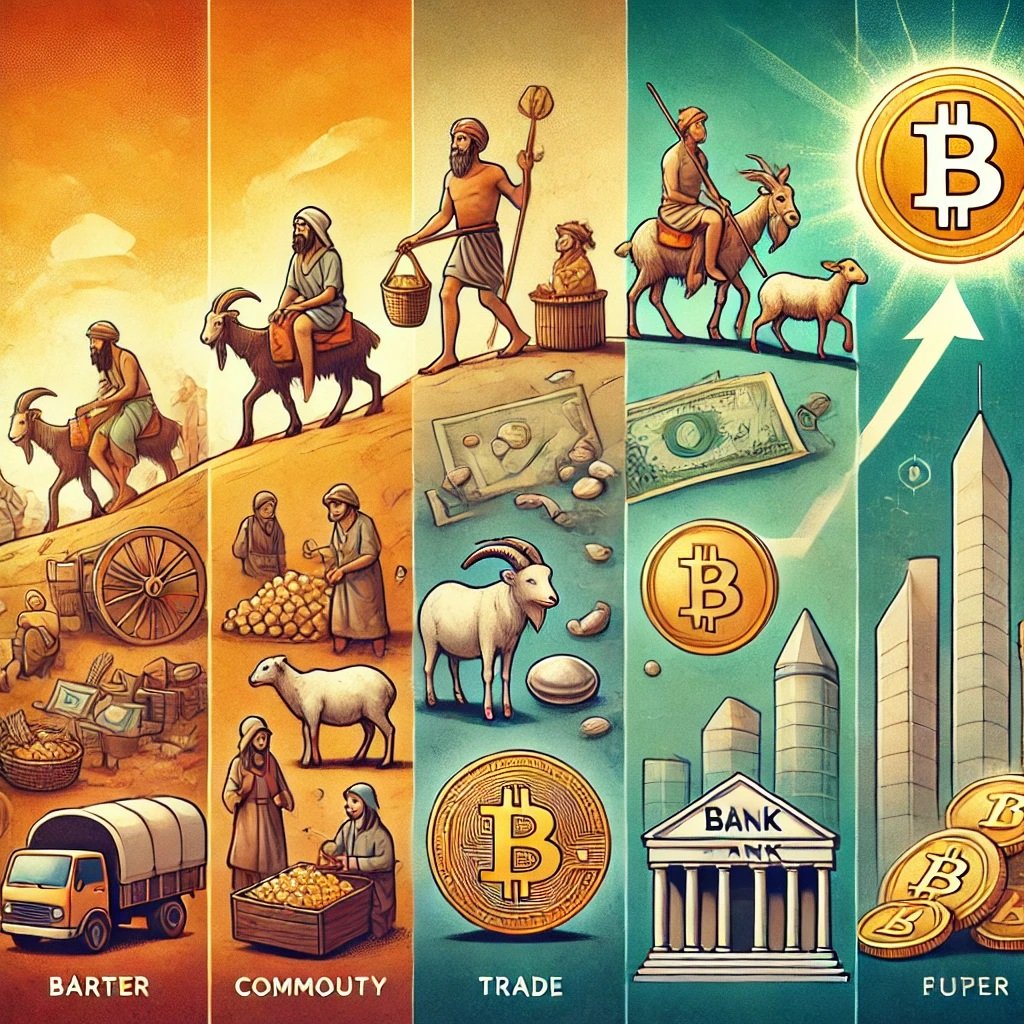
Money’s Evolution in Five Stages
1. Barter: Trading Without Cash
Before money, people bartered—swapping goods or services directly. A farmer might trade wheat for a shoemaker’s boots, but only if the shoemaker wanted wheat. This “double coincidence of wants” made trade inefficient and limited economic growth.
2. Commodities: The First Step Toward Money
To simplify trade, societies used valuable items like salt, cattle, or shells as early money. These commodity currencies were more efficient than barter but still flawed: they were hard to store, inconsistent in value, and difficult to transport.
3. Gold and Silver: The Rise of Coins
Around 600 BC, civilizations like the Lydians minted gold and silver coins. Durable, divisible, and scarce, these metals became the first reliable store of value. Even today, Bitcoin is often compared to gold—especially by investors seeking scarce assets outside the traditional banking system, including those using Bitcoin for High Net Worth Canadians.
4. Paper Money: From Gold to Promises
As economies expanded, carrying gold became impractical. Banks issued paper notes backed by stored gold. Eventually, this link was broken, giving rise to fiat currencies backed solely by government trust. While convenient, fiat systems enabled unlimited money creation, leading to inflation and debt—key reasons many businesses now explore alternatives such as Corporate Treasury Bitcoin Canada strategies.
5. Bitcoin: Digital Money for a New Era
In 2009, Bitcoin introduced a radical idea: digital money with a fixed supply of 21 million coins. Decentralized and secured by cryptography, Bitcoin operates without banks or governments. For Canadians who value sovereignty and self-custody, this represents a return to sound money principles—now enhanced by modern technology.
Why It Matters Today
Money’s evolution reflects humanity’s constant search for better systems. Since leaving the gold standard in 1971, fiat currencies have steadily lost purchasing power. Inflation and rising global debt continue to pressure households and businesses alike. Bitcoin offers a scarce, transparent alternative—one that can be held directly or transacted peer-to-peer, and even used in specialized transactions such as Bitcoin for Real Estate Canada.
What’s the Future of Money?
Will fiat currencies continue to evolve, or is Bitcoin the next major leap in monetary history? As more individuals, businesses, and institutions adopt Bitcoin, the shift away from purely trust-based money toward mathematically enforced scarcity becomes harder to ignore.